15 Discovery Questions That Help You Close More Sales

Billy Glenn
October 16, 2026 · 5 min read
Most salespeople think the secret to closing more deals is becoming a better closer.
I disagree.
I believe one of the biggest opportunities in sales happens long before you ask for the sale.
It happens during discovery.
Discovery is where you learn what the customer wants, why they want it, what problems they're trying to solve, and what would make a solution worth investing in.
But too many salespeople treat discovery like a checklist.
They ask a few basic questions, collect some information, and immediately jump into their presentation.
Then they wonder why the customer isn't excited.
Here's something I've learned throughout more than 20 years in sales and sales leadership:
The quality of your sales presentation depends on the quality of your discovery.
When you ask better questions, you uncover better information. And when you uncover better information, you can create a more meaningful buying experience.
Here are 15 discovery questions you can start using today.
1. What made you decide to look into this now?
Timing matters.
Something usually happens that causes a customer to explore a solution.
Maybe they're frustrated. Maybe their situation has changed. Maybe they've been putting something off for years.
This question helps you identify the event or motivation that started the buying process.
2. What's your biggest frustration with your current situation?
This question uncovers the problem behind the purchase.
Don't settle for a surface-level answer.
If a customer says their closet is disorganized, ask what that disorganization is causing.
Are they wasting time? Feeling overwhelmed? Running out of space?
The deeper you understand the frustration, the better you can help.
3. How long has this been a challenge?
This helps you understand how long the customer has been living with the problem.
A problem they've tolerated for three years may require a different conversation than something that happened yesterday.
4. What have you already tried?
This question reveals previous solutions, disappointments, and expectations.
It also helps you avoid recommending something that has already failed for them.
5. If you could change one thing about your current situation, what would it be?
This forces prioritization.
Customers may want ten different improvements, but one usually matters more than the others.
Find that one.
6. What would the ideal solution look like to you?
Now you're helping the customer describe success in their own words.
Pay close attention to the language they use.
Their words are often more persuasive than anything in your sales presentation.
7. Why is that important to you?
This may be one of the most powerful follow-up questions in sales.
A customer might say they want more storage.
But why?
Because they want less clutter?
Because they want their home to feel more peaceful?
Because they want to stop wasting time every morning?
The real motivation is often underneath the initial answer.
8. What happens if nothing changes?
This question helps the customer evaluate the cost of maintaining the status quo.
Use it thoughtfully, not as a scare tactic.
Sometimes the answer reveals that the problem is more important than they initially realized.
Other times, it reveals that the purchase isn't urgent.
Both answers are useful.
9. What matters most to you when choosing a solution?
Different customers value different things.
Some prioritize quality.
Others prioritize convenience, timing, flexibility, appearance, or long-term value.
Don't assume everyone buys for the same reason.
10. Have you established a budget or investment range?
A budget conversation should be part of discovery, not an uncomfortable surprise at the end.
Ask respectfully.
You might say:
“Have you established an investment range you're comfortable working within?”
Then explore whether that range aligns with the customer's expectations.
A budget is useful information, but it isn't the entire buying decision.
11. Who else will be involved in making the decision?
One of the most avoidable sales mistakes is discovering at the end that someone important wasn't included.
Ask early.
Not because you want to pressure anyone, but because you want everyone involved to have the information they need.
12. What other options are you considering?
Customers have alternatives.
Those alternatives may include competitors, doing it themselves, delaying the project, or doing nothing.
Understanding their options helps you explain meaningful differences without attacking competitors.
13. What concerns would you have about moving forward?
This gives customers permission to raise concerns before you ask for the sale.
It's much easier to address a concern openly than to discover it after the customer has disengaged.
14. If we found the right solution, when would you ideally want to get started?
This helps establish timing and expectations.
It also helps you understand whether the customer is actively preparing to make a decision or simply exploring possibilities.
15. What would make you feel confident that you're making the right decision?
This is one of my favorites.
Because ultimately, great salespeople don't just sell solutions.
They help customers feel confident about their decisions.
The answer may reveal a need for more information, reassurance, comparison, or clarity.
And now you know how to help.
The Secret Isn't Asking All 15 Questions
Here's an important distinction.
I'm not suggesting you sit down with every customer and fire off 15 questions like you're conducting an interrogation.
Great discovery is a conversation.
You ask a question.
You listen.
You follow up.
You explore.
And sometimes the best thing you can do is stop talking.
If a customer gives you an important answer, don't rush to your next scripted question.
Stay there.
Ask them to explain.
Because the most valuable information often comes from the second or third question about the same topic.
Stop Presenting Before You Understand
Imagine two salespeople.
The first asks three basic questions and immediately starts explaining features.
The second takes time to understand the customer's frustrations, desired outcome, priorities, investment expectations, and decision process.
Which salesperson is better positioned to recommend the right solution?
The second one.
Not because they talked more.
Because they understood more.
The salesperson who understands the customer best is often the salesperson who earns the greatest trust.
Final Thought
If you want to improve your closing rate, don't focus exclusively on what you say at the end of the conversation.
Focus on what you learn at the beginning.
Ask better questions.
Listen more carefully.
Understand what matters.
Then build your recommendation around the customer's actual needs.
Because great discovery doesn't just help you close more sales.
It helps you serve your customers better.
Take Your Discovery Skills to the Next Level
Want a practical framework for uncovering customer needs, identifying buying motives, and creating stronger sales conversations?
Explore The Discovery Blueprint, my guide to asking better questions and conducting more effective sales consultations.
Explore The Discovery Blueprint
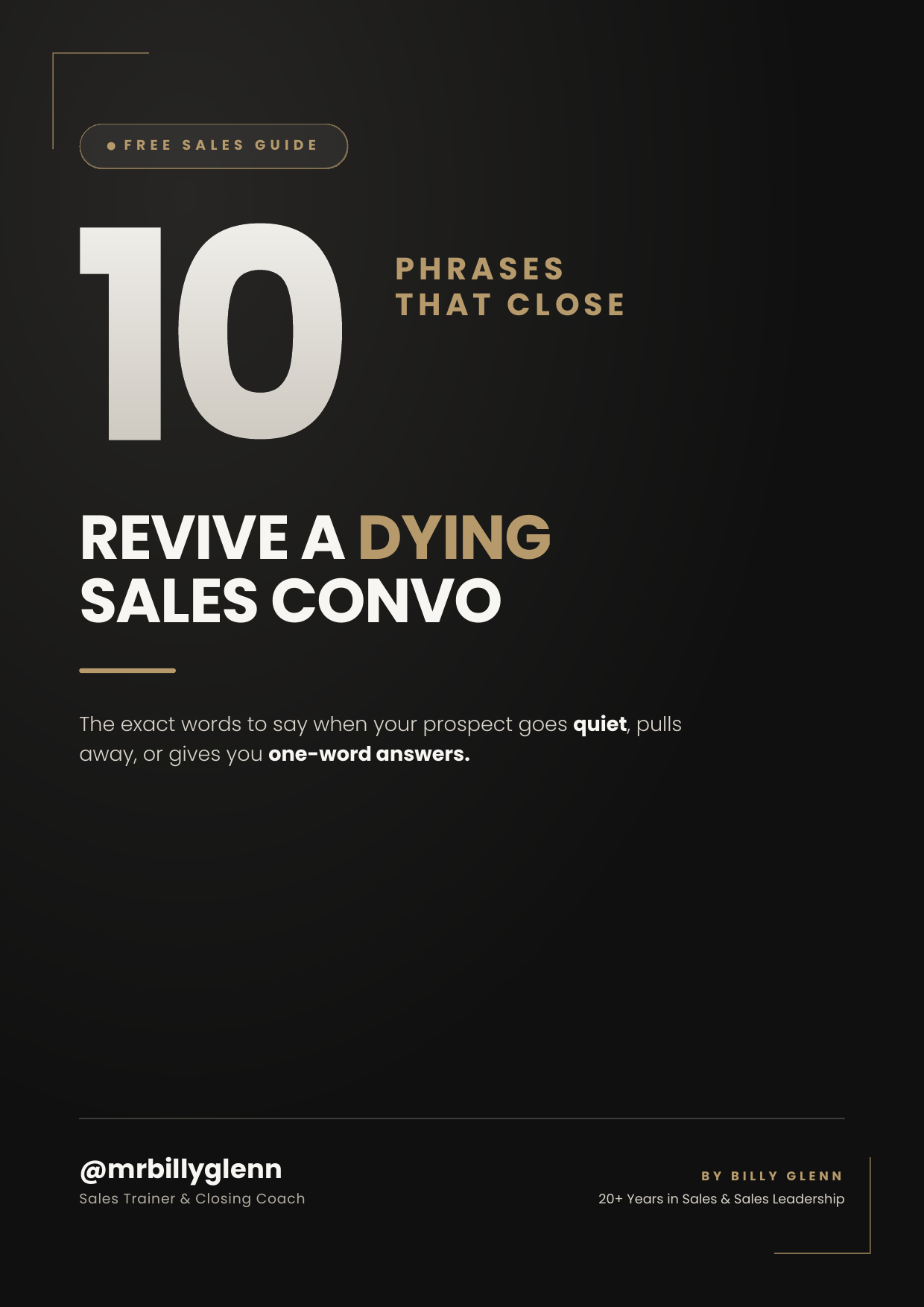
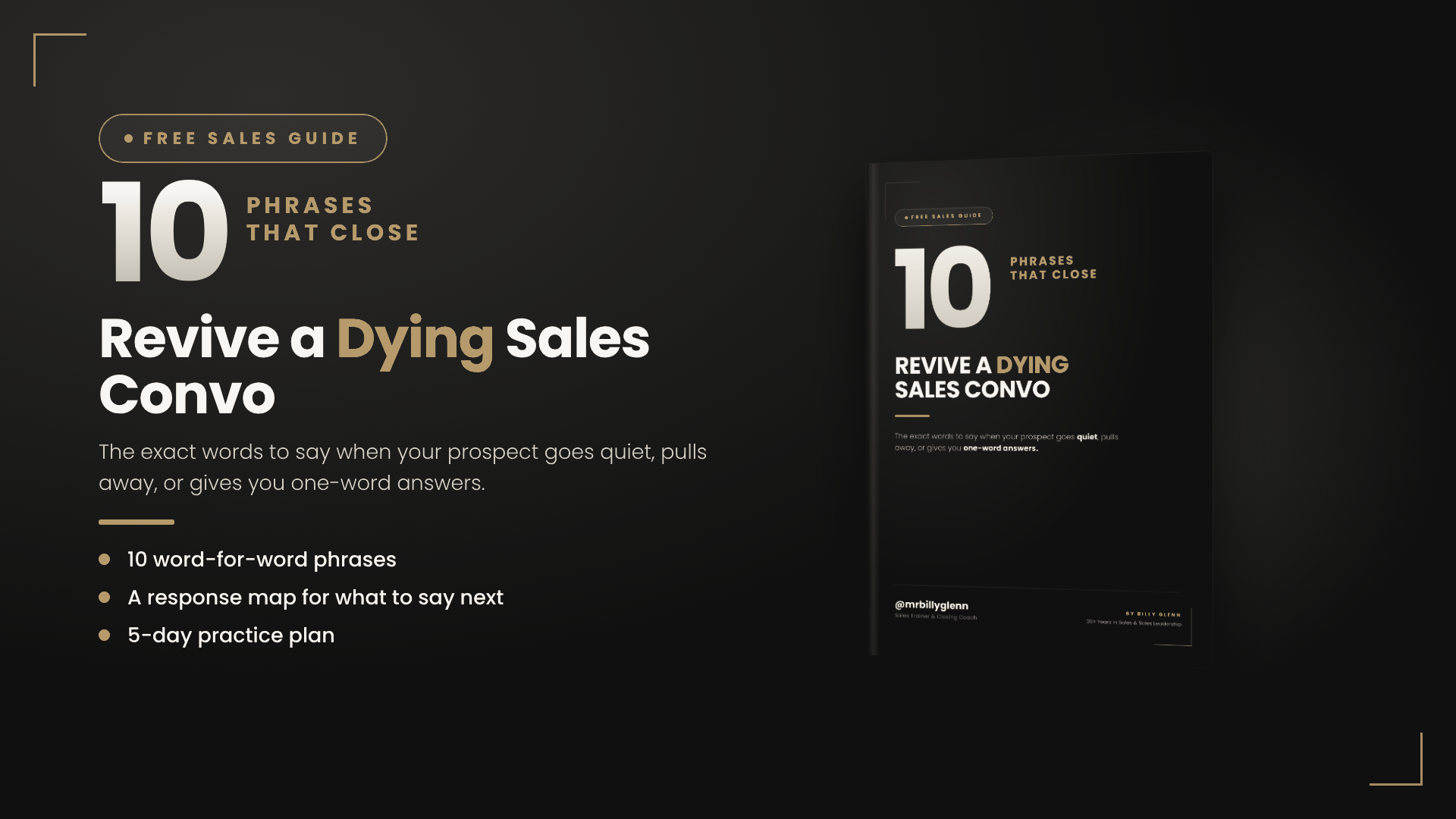
Or get the free guide, 10 Phrases That Revive a Dying Sales Conversation.
About Billy Glenn
Billy has spent more than 20 years in sales and sales leadership. He teaches the words, frameworks, and habits that turn conversations into closed deals. More about Billy