7 Sales Closing Mistakes That Are Costing You Deals

Billy Glenn
October 16, 2026 · 5 min read
Let me ask you something.
Have you ever walked out of a sales appointment feeling like everything went perfectly?
The customer liked you.
They loved the product.
They seemed excited.
You answered every question.
And then, when it came time to make a decision, they didn't buy.
What happened?
Sometimes the answer is simple: the customer wasn't ready, the solution wasn't right, or the timing didn't work.
But other times, the salesperson made a mistake that prevented the conversation from moving forward.
After more than 20 years working in sales and sales leadership, one thing I believe strongly is this:
Closing problems often start long before the closing question.
Let's look at seven common mistakes and what you can do differently.
Mistake 1: Talking Too Much
Salespeople love talking about their products.
They explain features, demonstrate options, and share every detail they can think of.
But there's a problem.
If you're doing all the talking, you aren't learning enough about your customer.
And if you don't understand your customer, how can you confidently recommend the right solution?
Try asking:
“Of everything we've discussed, what stands out as most important to you?”
Then listen.
Sometimes that answer tells you more than another 15 minutes of presenting ever could.
Mistake 2: Presenting Before Discovering
Imagine visiting a doctor who recommends treatment before asking about your symptoms.
You'd probably question the recommendation.
Sales is similar.
When you start presenting solutions before understanding the problem, you're asking customers to trust a recommendation that may not feel personalized.
Before presenting, understand:
- What the customer wants to accomplish.
- What problem they're trying to solve.
- Why solving it matters.
- Their investment expectations.
- Who will participate in the decision.
- Their desired timeline.
The better your discovery, the more relevant your presentation becomes.
Mistake 3: Selling Features Instead of Outcomes
Customers need to know what they're buying.
But they also need to understand why it matters.
Let's say you're selling a custom closet.
You could spend ten minutes explaining shelving configurations, drawers, finishes, and accessories.
Or you could connect those features to the customer's stated goals.
“You mentioned that your biggest frustration is not having enough organized space. This layout gives your everyday items dedicated locations so they're easier to access.”
Now the customer understands how the design addresses their problem.
Don't eliminate features from your presentation.
Connect them to outcomes.
Mistake 4: Avoiding the Money Conversation
Some salespeople are uncomfortable discussing price.
They wait until the end of the presentation, hoping the customer will love the solution enough to accept whatever it costs.
That's a risky strategy.
Price should never feel like a surprise.
Discuss investment expectations early.
Then make sure your recommendation fits the customer's priorities and financial comfort level.
You might ask:
“What investment range did you have in mind for this project?”
And later:
“Based on what we've discussed, how comfortable are you with the investment for this solution?”
Notice that you're not simply asking whether the customer has enough money.
You're helping them evaluate whether the solution makes sense.
Mistake 5: Discounting Too Quickly
A customer hesitates.
The salesperson panics.
And suddenly there's a discount on the table.
But what if price wasn't the actual problem?
What if the customer was uncertain about quality?
What if they needed another decision-maker involved?
What if they didn't understand how the solution would help?
Discounting before understanding the concern can reduce your revenue without solving the customer's hesitation.
Before offering a discount, ask:
“When you think about the investment, what's your biggest concern?”
Find the issue before trying to solve it.
Mistake 6: Never Asking for the Sale
This one surprises people.
Salespeople can conduct an excellent consultation and still fail to ask for a decision.
They present.
They answer questions.
They explain the next steps.
And then they say:
“Well, just let me know what you think.”
There's nothing wrong with giving customers time when they need it.
But if the customer appears comfortable and the solution fits, it's appropriate to ask whether they're ready.
Try:
“Based on everything we've discussed, does this feel like the right solution for you?”
Or:
“Are you comfortable moving forward with this option?”
Simple.
Direct.
Professional.
You don't need a clever closing trick.
You need to give the customer an opportunity to decide.
Mistake 7: Following Up Without Adding Value
Here's a follow-up message we've all seen:
“Just checking in to see if you've made a decision.”
And then another.
And another.
Eventually, the customer stops responding.
Why?
Because the salesperson isn't bringing anything new to the conversation.
Instead, follow up with a purpose.
Reference the customer's priorities.
Answer an outstanding question.
Provide useful information.
Or confirm the next step you previously agreed upon.
For example:
“During our conversation, you mentioned that maximizing your storage space was your biggest priority. I wanted to follow up and see whether you had any additional questions about the layout we discussed.”
That's a better conversation than simply asking for an update.
The Common Thread Behind These Mistakes
Look at all seven mistakes.
What do they have in common?
Most happen when the salesperson becomes more focused on making the sale than understanding the customer.
That's why I teach a different approach.
Serve first. Understand second. Recommend with confidence. Then earn the right to ask for the sale.
Selling should feel like helping someone make a good decision.
Not trying to win an argument.
A Challenge for Your Next Five Sales Appointments
During your next five appointments, pay attention to three things:
First: How much time do you spend asking questions versus talking?
Second: Do you understand what matters most to the customer before presenting your recommendation?
Third: Do you clearly ask for a decision when the customer has the information they need?
After each appointment, write down one thing you did well and one thing you could improve.
Small improvements in your sales conversations can create meaningful improvements in your performance over time.
Final Thought
You don't have to become a completely different salesperson to close more deals.
Sometimes you simply need to eliminate the habits that are getting in your way.
Ask better questions.
Stop rushing to discount.
Connect features to outcomes.
And don't be afraid to ask for the sale when you've earned the opportunity.
Better sales results begin with better sales conversations.
Never Run Out of the Right Words
I created 265 Phrases That Close Deals to help sales professionals improve the language they use during discovery, objections, follow-up, and closing.
If you've ever found yourself wondering what to say next, this guide was built for you.
Explore 265 Phrases That Close Deals
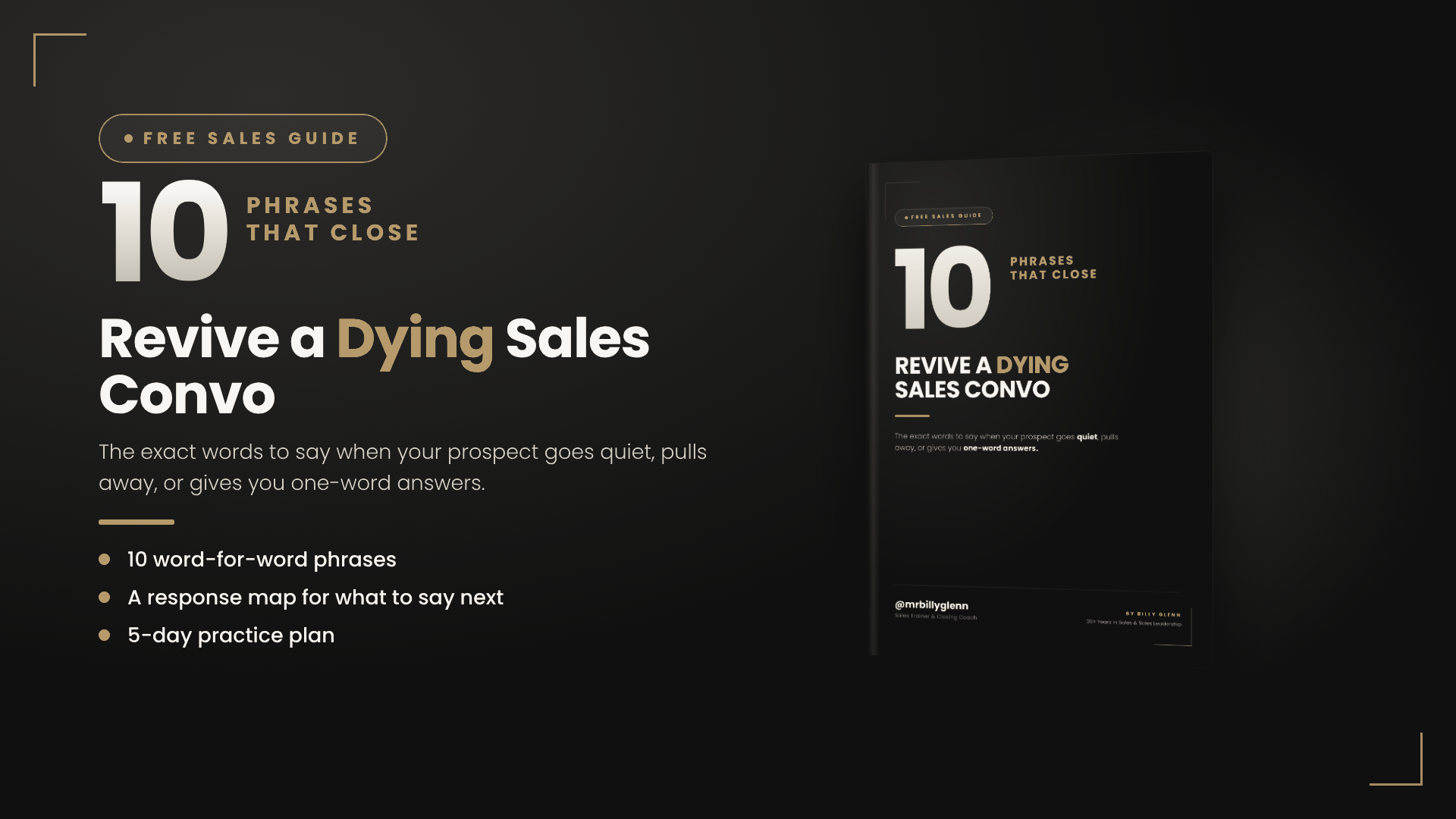
Or get the free guide, 10 Phrases That Revive a Dying Sales Conversation.
About Billy Glenn
Billy has spent more than 20 years in sales and sales leadership. He teaches the words, frameworks, and habits that turn conversations into closed deals. More about Billy