How to Coach an Underperforming Sales Team Without Destroying Their Confidence

Billy Glenn
October 16, 2026 · 6 min read
If you're a sales manager, let me ask you a question.
When one of your salespeople is struggling, what's your first reaction?
Do you immediately talk about their numbers?
Do you ask why they aren't closing more business?
Do you tell them they need to work harder?
Or do you take the time to understand what's actually causing the problem?
There's a big difference between managing performance and developing people.
And I believe the best sales leaders understand that difference.
Your job as a sales leader isn't simply to hold people accountable for results. It's to help them develop the skills and behaviors that produce better results.
Let's talk about how to do that.
1. Diagnose Before You Coach
Imagine a salesperson whose closing rate has dropped.
It's tempting to assume they need to become better at closing.
But what if closing isn't the problem?
What if they're struggling with discovery?
What if they aren't identifying the decision-makers?
What if they're presenting solutions outside the customer's investment expectations?
Or what if they simply aren't receiving enough qualified opportunities?
The number tells you something is happening.
It doesn't always tell you why.
Before coaching, look at the process.
Ask:
“Where in the sales conversation are we losing momentum?”
Review the salesperson's opportunities, consultation notes, follow-up habits, and customer conversations.
Identify the behavior that needs improvement.
Then coach that behavior.
2. Separate the Person From the Performance
One of the fastest ways to damage a salesperson's confidence is to make performance feedback feel personal.
There's a difference between saying:
“You're not a good closer.”
And saying:
“I've noticed we're getting to the presentation stage, but customers are hesitating when it's time to make a decision. Let's work on understanding what's happening.”
The first statement attacks identity.
The second identifies a coachable challenge.
Salespeople need accountability.
But they also need to believe improvement is possible.
Your words as a leader matter.
3. Coach One Skill at a Time
I've seen managers overwhelm salespeople with too many things to improve.
Ask better questions.
Present more effectively.
Close harder.
Follow up faster.
Generate more leads.
Improve your notes.
All at once.
That's a lot.
Instead, identify the skill that will make the biggest difference right now.
Maybe it's uncovering the customer's real motivation.
Maybe it's discussing the investment earlier.
Maybe it's asking for the sale more confidently.
Choose one.
Practice it.
Measure it.
Then build from there.
Focused coaching creates clarity. Clarity creates better execution.
4. Use Real Conversations, Not Just Motivational Speeches
Motivation has its place.
But motivation without skill development rarely solves a performance problem.
If a salesperson struggles with objections, don't simply tell them to be more confident.
Practice the objection.
For example:
Customer: “Your price is higher than I expected.”
Ask your salesperson how they would respond.
Listen to their answer.
Then work together to improve it.
A stronger response might be:
“I understand. When you compare the investment to what you expected, is your main concern the total amount or making sure the solution delivers the value you're looking for?”
Now practice again.
Let the salesperson say it in their own words.
Repeat until the conversation feels natural.
That's coaching.
5. Recognize What People Are Doing Right
Some managers only speak up when something goes wrong.
The salesperson misses a goal.
They lose a deal.
They make a mistake.
And suddenly the manager wants to have a conversation.
But when someone demonstrates excellent discovery, handles a difficult customer professionally, or improves a key behavior, there's silence.
That's a missed opportunity.
Recognition reinforces the behaviors you want repeated.
Be specific.
Instead of:
“Great job.”
Try:
“I liked how you slowed down and asked the customer what mattered most before presenting the design. That was excellent discovery.”
Now the salesperson knows exactly what they did well.
And they're more likely to repeat it.
6. Create Accountability Without Fear
Accountability is important.
Sales teams need clear expectations.
But accountability shouldn't feel like intimidation.
An effective coaching conversation might sound like this:
Manager: “Our goal is to improve your close rate. What do you think is the biggest thing holding you back right now?”
Salesperson: “I think I struggle when customers push back on price.”
Manager: “That's helpful. Let's focus on how you discuss investment expectations during discovery. What could you do differently in your next consultation?”
Salesperson: “I could ask about their investment range before I start designing.”
Manager: “Good. Let's make that your focus this week. We'll review how it went during our next coaching session.”
Notice what happened.
The manager didn't avoid accountability.
They created ownership.
The salesperson knows what to work on and when they'll discuss progress.
7. Measure the Behaviors, Not Just the Results
Sales results matter.
But many of the behaviors that influence those results can be measured and coached.
Examples include:
- Discovery questions asked.
- Decision-makers identified.
- Investment expectations discussed.
- Follow-up commitments established.
- Sales opportunities documented.
- Self-generated prospecting activity.
- Consultation-to-sale conversion.
Don't turn every behavior into a complicated reporting exercise.
Choose the few that are most relevant to the problem you're solving.
Then look for improvement over time.
A salesperson can do the right things and still lose an individual deal.
Your job is to recognize whether the process is improving, not judge every conversation solely by its outcome.
8. Build a Team That Learns From Each Other
Some of the best coaching opportunities happen when salespeople share what's working.
Create opportunities for team members to discuss:
- A recent sales win.
- A challenging objection.
- A discovery question that worked.
- A follow-up conversation that moved a deal forward.
- Something they learned from a lost opportunity.
Keep these conversations practical.
Encourage collaboration instead of competition alone.
When people feel comfortable sharing what works and what doesn't, the entire team can improve.
9. Follow Through on Your Coaching
Here's where many sales managers fall short.
They have a great coaching conversation.
They establish an action plan.
Everyone leaves motivated.
And then nobody revisits it.
Two weeks later, the same problem appears.
Coaching requires follow-through.
Agree on a specific behavior.
Set a reasonable timeline.
Review actual examples.
Celebrate progress.
Address remaining gaps.
Then decide what comes next.
Without follow-through, coaching becomes another meeting.
With follow-through, it becomes a development process.
The Difference Between a Boss and a Coach
A boss says:
“You need to close more sales.”
A coach says:
“Let's figure out what's preventing you from closing more sales, and build a plan to improve it.”
A boss focuses primarily on the number.
A coach understands the behaviors behind the number.
A boss points out the problem.
A coach helps develop the solution.
Great sales leaders still set expectations and hold people accountable.
But they understand that sustainable improvement comes from developing people, not simply demanding better results.
Final Thought
If you're leading a sales team, remember this:
Your team's performance is influenced by the quality of the coaching, clarity, and support they receive.
Don't just manage the scoreboard.
Develop the players.
Ask better questions.
Practice real conversations.
Recognize improvement.
Create accountability.
And follow through.
Because when you invest in developing your people, you're investing in the long-term strength of your entire sales organization.
Ready to Build a Stronger Sales Team?
I work with individuals, sales leaders, and business owners who want to improve sales conversations, strengthen coaching skills, and develop more consistent performance.
Whether you're looking for one-on-one coaching or customized training for your entire team, I'd welcome the opportunity to learn about your goals.
Request a Corporate Sales Training Consultation
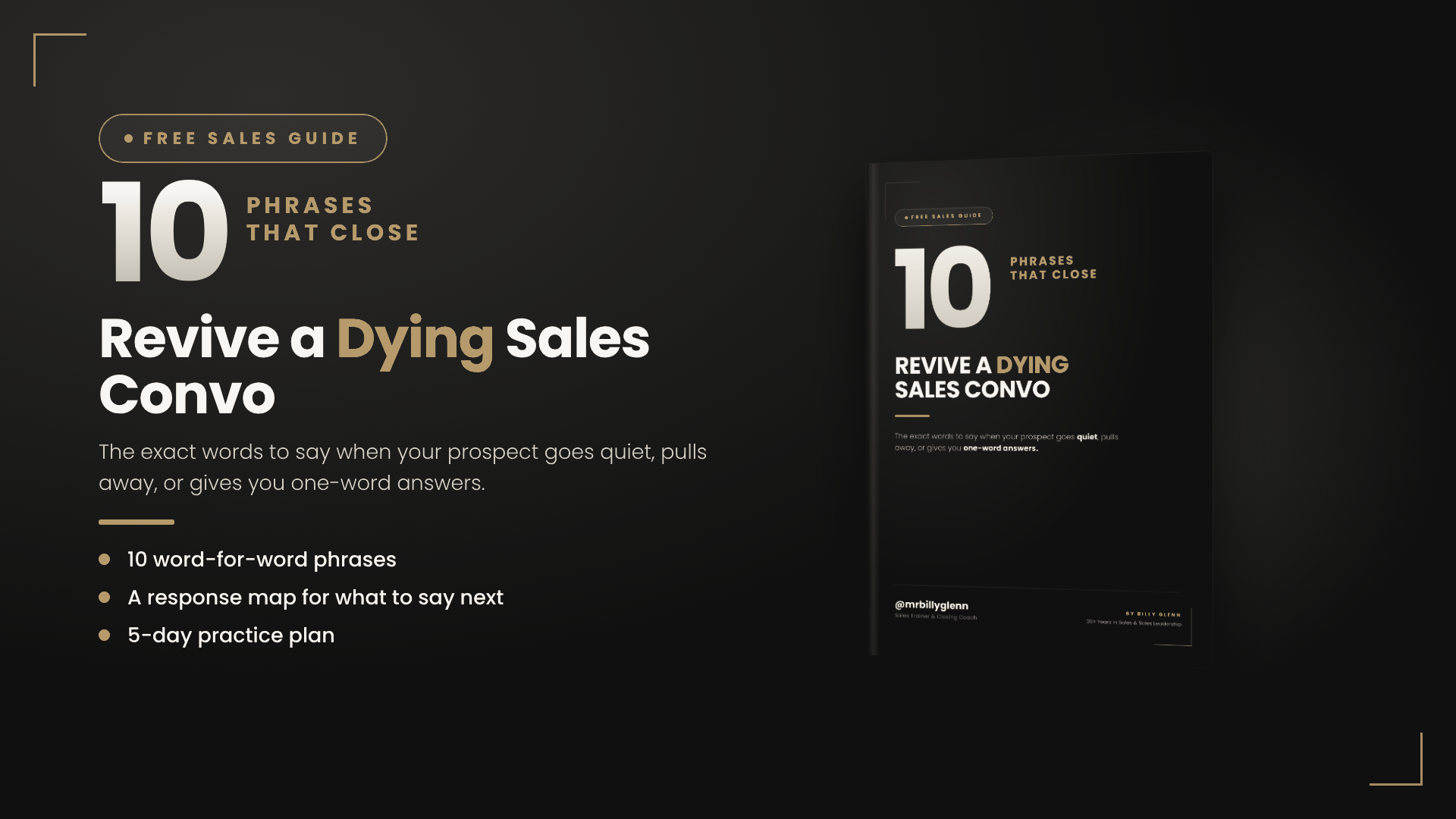
Or get the free guide, 10 Phrases That Revive a Dying Sales Conversation.
About Billy Glenn
Billy has spent more than 20 years in sales and sales leadership. He teaches the words, frameworks, and habits that turn conversations into closed deals. More about Billy