How to Handle “I Need to Think About It” Without Losing the Sale

Billy Glenn
October 16, 2026 · 6 min read
You've delivered a great presentation. You've explained the product, demonstrated the value, answered the questions, and everything seems to be going well.
Then you ask for the sale.
And the customer says five words that every salesperson has heard:
“I need to think about it.”
Sound familiar?
For many salespeople, this is where the conversation starts falling apart.
Some immediately offer a discount. Others start talking faster, repeating features and benefits the customer has already heard. And some simply say, “No problem, I'll follow up next week,” hoping the customer will magically become ready to buy.
But here's something I've learned throughout more than 20 years in sales and sales leadership:
“I need to think about it” is not necessarily a rejection. It's often a signal that something remains unresolved.
And your job isn't to pressure the customer into making a decision.
Your job is to understand what's holding them back.
The Biggest Mistake Salespeople Make
When customers hesitate, many salespeople instinctively try to convince them.
They explain why the product is great.
They remind the customer about the promotion.
They offer more information.
They start defending the price.
But the more you try to convince someone who isn't ready, the more resistance you can create.
Why?
Because you're answering questions the customer may not even be asking.
Think about it.
If a customer is worried about whether the product will solve their problem, explaining how great your company is won't necessarily help.
If they're uncomfortable with the investment, talking about product features won't resolve that concern.
And if they need another person's approval, offering a discount may accomplish absolutely nothing.
You cannot solve an objection you haven't identified.
That's why great salespeople don't immediately respond with another pitch.
They get curious.
Step 1: Acknowledge the Customer's Hesitation
The first thing you want to do is remove the pressure.
When someone says, “I need to think about it,” don't challenge them.
Acknowledge their response.
Try saying:
“Absolutely. This is an important decision, and I want you to feel completely comfortable with it.”
This simple response accomplishes something powerful.
It communicates that you're not there to force a decision.
You're there to help them make the right one.
And when customers feel respected, they're often more willing to tell you what's actually on their minds.
Step 2: Ask a Better Question
Now comes the part that separates average salespeople from exceptional ones.
Instead of immediately asking when you can follow up, ask a question that helps identify what the customer needs to consider.
Here's one of my favorites:
“Of course. Just so I can be helpful, what part of the decision would you like to think through a little more?”
Notice what that question doesn't do.
It doesn't accuse the customer of making an excuse.
It doesn't challenge their judgment.
And it doesn't pressure them to buy.
It simply invites them to explain.
Their answer may reveal that they're concerned about the price, timing, product fit, or something else entirely.
Now you're having a real conversation.
Step 3: Find the Real Concern
Here's something every salesperson needs to understand:
The first objection isn't always the real objection.
A customer might say the price is too high when their actual concern is whether the purchase is worth the investment.
They might say they need to speak with their spouse when they really want reassurance about making the right choice.
Or they might say they need more time because they don't fully understand how the solution will improve their situation.
Don't assume you know the reason.
Ask.
For example:
Customer: “It's just more than I was planning to spend.”
Salesperson: “I understand. When you say it's more than you planned, is your biggest concern the total investment, or making sure you're getting enough value for that investment?”
That's a very different conversation from immediately offering 10% off.
You're helping the customer clarify the decision.
And you're learning what actually matters.
Step 4: Reconnect the Solution to What Matters Most
One of the biggest mistakes salespeople make is spending too much time talking about the product and not enough time talking about the customer's desired outcome.
Customers don't simply buy features.
They buy solutions, convenience, confidence, time savings, and improvements to their lives or businesses.
Let's use a custom closet consultation as an example.
Imagine a customer tells you during discovery that their mornings are stressful because they can never find what they need.
Their closet is disorganized, and getting ready takes longer than it should.
Later, they hesitate over the investment.
Instead of saying:
“Our materials are high quality, and we offer great designs.”
Try this:
“Earlier, you mentioned that one of your biggest frustrations is how much time you spend getting ready every morning. How valuable would it be to have everything organized and easy to find so you could start your day without that stress?”
Now you're connecting the solution to something they told you matters.
That's the difference between convincing and persuading.
Convincing focuses on why you think they should buy. Persuasion helps customers recognize why the solution matters to them.
And that difference changes the entire sales conversation.
Step 5: Make It Easy to Move Forward
Once you've uncovered and addressed the customer's concern, don't automatically end the conversation.
Find out whether they're comfortable moving forward.
You might say:
“Now that we've talked through that concern, how are you feeling about moving forward?”
Or:
“Does that give you the clarity you needed to make a decision?”
These questions are direct without being aggressive.
You're not trying to trick the customer.
You're checking whether you've actually helped them.
And if they still aren't ready?
That's okay.
Respect their decision, clarify any remaining questions, and agree on a specific next step if they'd like to continue the conversation.
A professional follow-up plan is far more effective than repeatedly calling someone and asking:
“Have you made a decision yet?”
Five Phrases You Can Use Today
Here are five phrases worth adding to your sales conversations:
1. When the customer needs time:
“Absolutely. What part of the decision would you like to think through a little more?”
2. When the customer is concerned about price:
“Is your concern more about the investment itself, or making sure the solution delivers the value you're looking for?”
3. When the customer seems uncertain:
“What would you need to feel more confident about making this decision?”
4. When the customer needs another person's input:
“That makes sense. What questions do you think they'll want answered before you make the decision together?”
5. When you've addressed the concern:
“Now that we've talked through that, how are you feeling about moving forward?”
Notice the common theme.
Every phrase encourages a conversation rather than a confrontation.
That's intentional.
The Real Secret to Handling Objections
Great objection handling doesn't begin when the customer objects.
It begins during discovery.
When you understand a customer's goals, frustrations, priorities, budget, decision process, and desired outcome before presenting your solution, you're in a much stronger position to guide the conversation.
You don't have to guess what matters.
You already know.
And when an objection appears, you have the context to respond thoughtfully.
This is why I teach salespeople to focus on serving before selling.
Because the best sales conversations aren't about finding the perfect comeback.
They're about asking better questions, listening carefully, and helping people make confident decisions.
Final Thought: Stop Chasing the Yes
Here's what I want you to remember:
Your job isn't to get every customer to say yes. Your job is to help the right customer make the right decision with confidence.
Sometimes that decision will be yes.
Sometimes it will be no.
And sometimes they'll need more information or more time.
The key is knowing the difference.
So the next time a customer says, “I need to think about it,” don't panic.
Don't immediately discount.
And don't launch into another presentation.
Get curious.
Ask a better question.
Understand what's really happening.
Because sometimes the difference between a lost opportunity and a closed sale is one great conversation.
Want More Phrases That Help You Close With Confidence?
Knowing what to say during important sales conversations can make a tremendous difference.
That's why I created 265 Phrases That Close Deals, a practical collection of sales language designed to help you navigate objections, ask better questions, and guide customers toward confident decisions.
Explore 265 Phrases That Close Deals
Or start with my free guide:
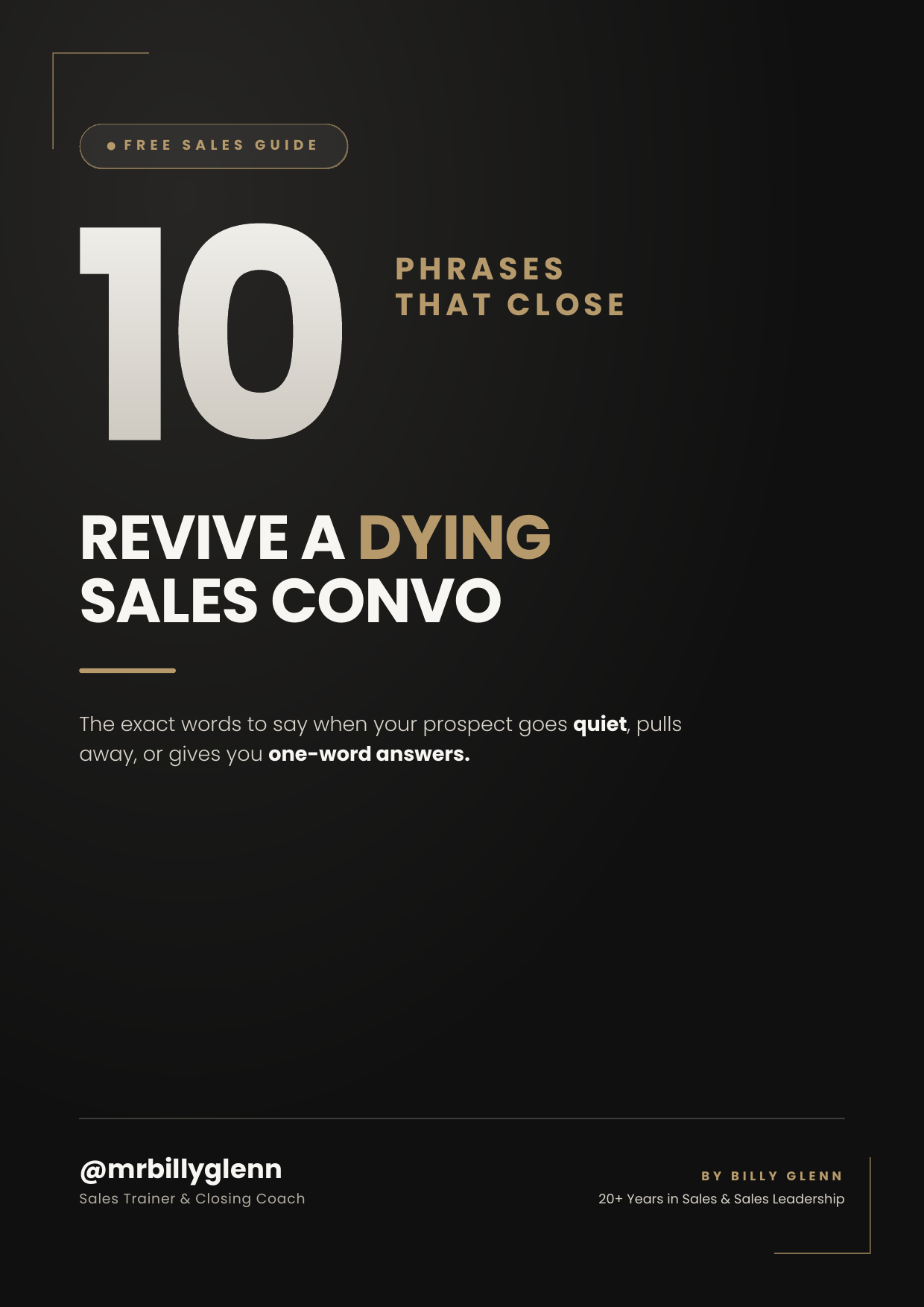
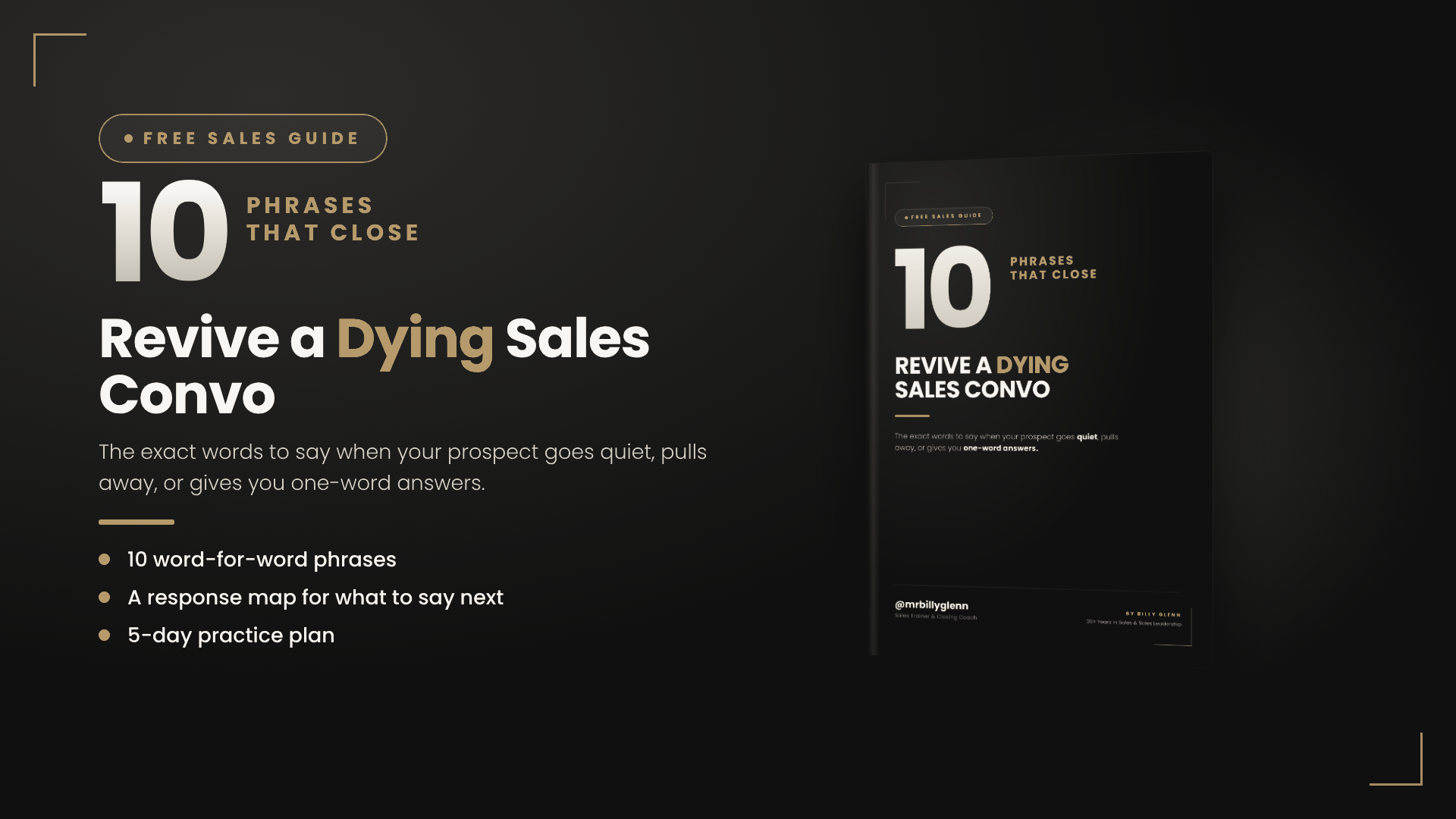
10 Phrases That Revive a Dying Sales Conversation
Billy Glenn is a sales leader, author, and sales coach with more than 20 years of experience in sales and leadership. Through The Sales Playbook and his Serve & Close System, he helps sales professionals improve their conversations, build trust, and close more business without unnecessary pressure.
About Billy Glenn
Billy has spent more than 20 years in sales and sales leadership. He teaches the words, frameworks, and habits that turn conversations into closed deals. More about Billy