10 Sales Closing Techniques That Actually Work

Billy Glenn
October 16, 2026 · 4 min read
Most salespeople think closing happens in the last two minutes of a call. It doesn't. The close is the result of everything that came before it: the questions you asked, the problems you uncovered, and how clearly you connected your solution to what the buyer actually cares about.
That said, at some point you have to ask for the decision. Here are ten closing techniques that work because they serve the buyer, not because they trap them.
1. The Summary Close
Before you ask for anything, play back what you heard. Buyers rarely hear their own problem said out loud in one place.
"So let me make sure I've got this right. You're losing about two days a month to manual reporting, your team is frustrated, and you want this fixed before your busy season. Is that accurate?"
When they say yes, the next step feels natural instead of forced.
2. The Next-Step Close
Not every call ends in a signature. Many end in a commitment to the next step. Make that step specific.
"The next step would be a 30-minute walkthrough with your operations lead. Does Tuesday or Thursday work better?"
Vague endings like "I'll follow up next week" are where deals go to die.
3. The Assumptive Close (Done Right)
The assumptive close gets a bad reputation because people use it before they've earned it. Done right, it simply means speaking as if the buyer has already decided, after they have shown every sign that they have.
"Based on everything you've told me, I'd suggest we start with the standard package. Want me to send the paperwork over today?"
If you haven't done the discovery, this feels pushy. If you have, it feels helpful.
4. The Choice Close
Give two good options instead of a yes-or-no question.
"Would you rather start with the full team, or begin with your top five reps and expand from there?"
Both answers move the deal forward, and the buyer stays in control.
5. The Question Close
Instead of telling the buyer they should buy, ask a question that lets them tell you.
"If we could solve the reporting problem we talked about, what would that mean for you and your team?"
People believe what they say far more than what you say.
6. The Concern Check
Before asking for the decision, invite any remaining concern into the open.
"Before we talk about next steps, is there anything that would keep you from moving forward?"
Hidden objections don't go away. They just show up later as "we went in a different direction." Surface them now while you can still help.
7. The Timeline Close
Tie the decision to a date the buyer already cares about, not one you invented.
"You mentioned you want this in place before your busy season starts in March. Working backward, we'd need to get started by mid-January. Does that work for you?"
This isn't false urgency. It's their urgency, reflected back to them.
8. The Trial Close
Throughout the conversation, check the temperature.
"How does that sound so far?" "Is this the kind of thing you were looking for?"
Trial closes tell you whether you're on track long before the final ask. If the answers are lukewarm, you know you have more discovery to do.
9. The Direct Close
Sometimes the best close is the simplest one.
"It sounds like this is a fit. Are you ready to move forward?"
Many reps avoid this because they're afraid of a "no." But a clear "no" is far more useful than a polite maybe that drags on for weeks.
10. The Serve-First Close
This is the mindset behind every technique above. You're not closing on someone. You're helping them make a decision that's good for them.
"My goal is for you to make the right decision, even if that's not us. Based on what you've shared, I genuinely think this solves the problem. What would you like to do?"
When buyers feel that you're on their side, the close stops being a battle.
What Ties These Together
Notice that none of these techniques rely on pressure. Each one works because it's built on something the buyer told you. That's why discovery matters so much: you can't close well on information you never gathered.
If you want the exact words to use when a buyer hesitates at the close, 265 Phrases That Close Deals gives you word-for-word responses to the objections you hear every week.
And if you want the whole system, from first conversation to signed deal, The Serve & Close System is launching soon. You can join the wait list today.
Start With the Right Words
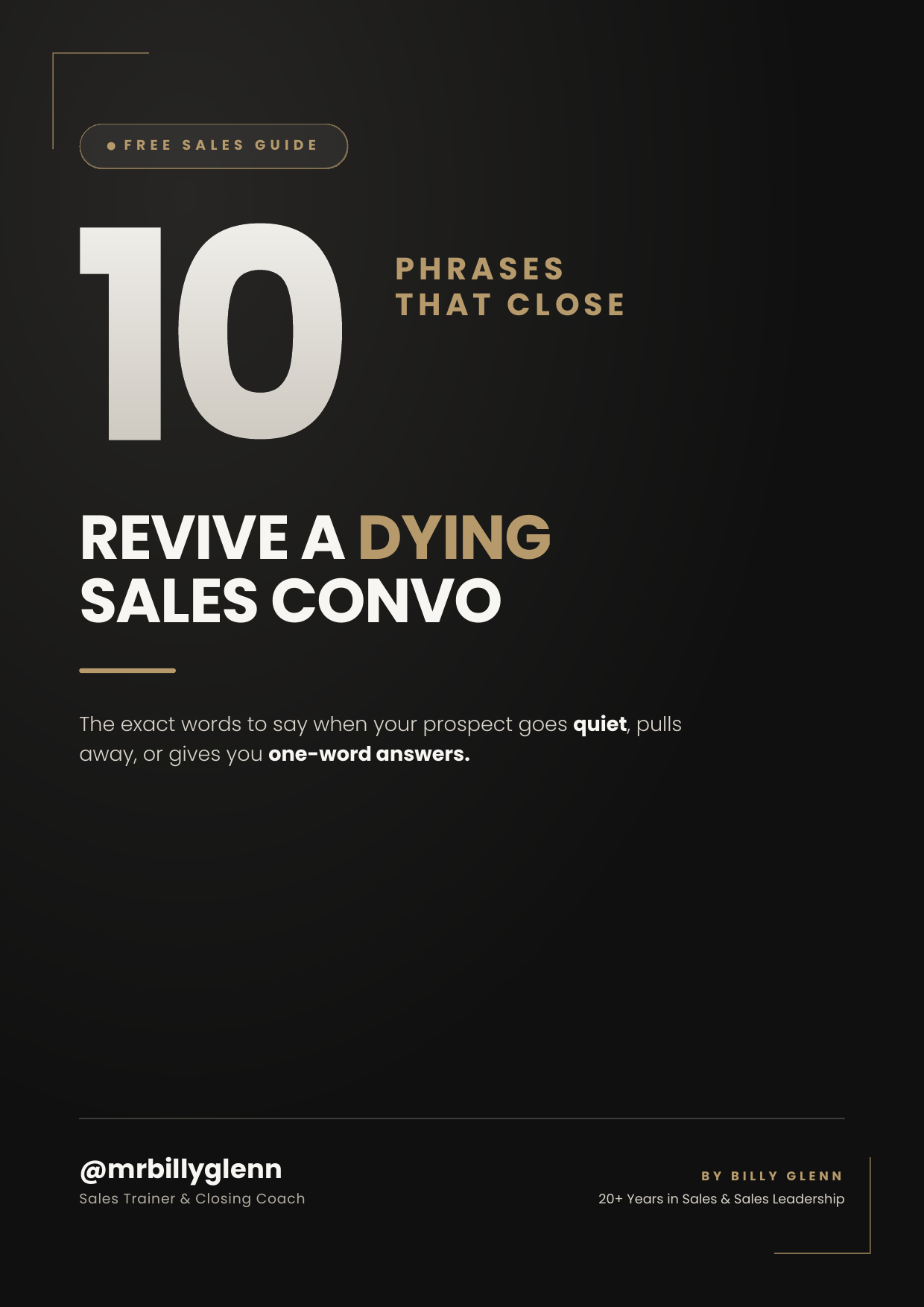
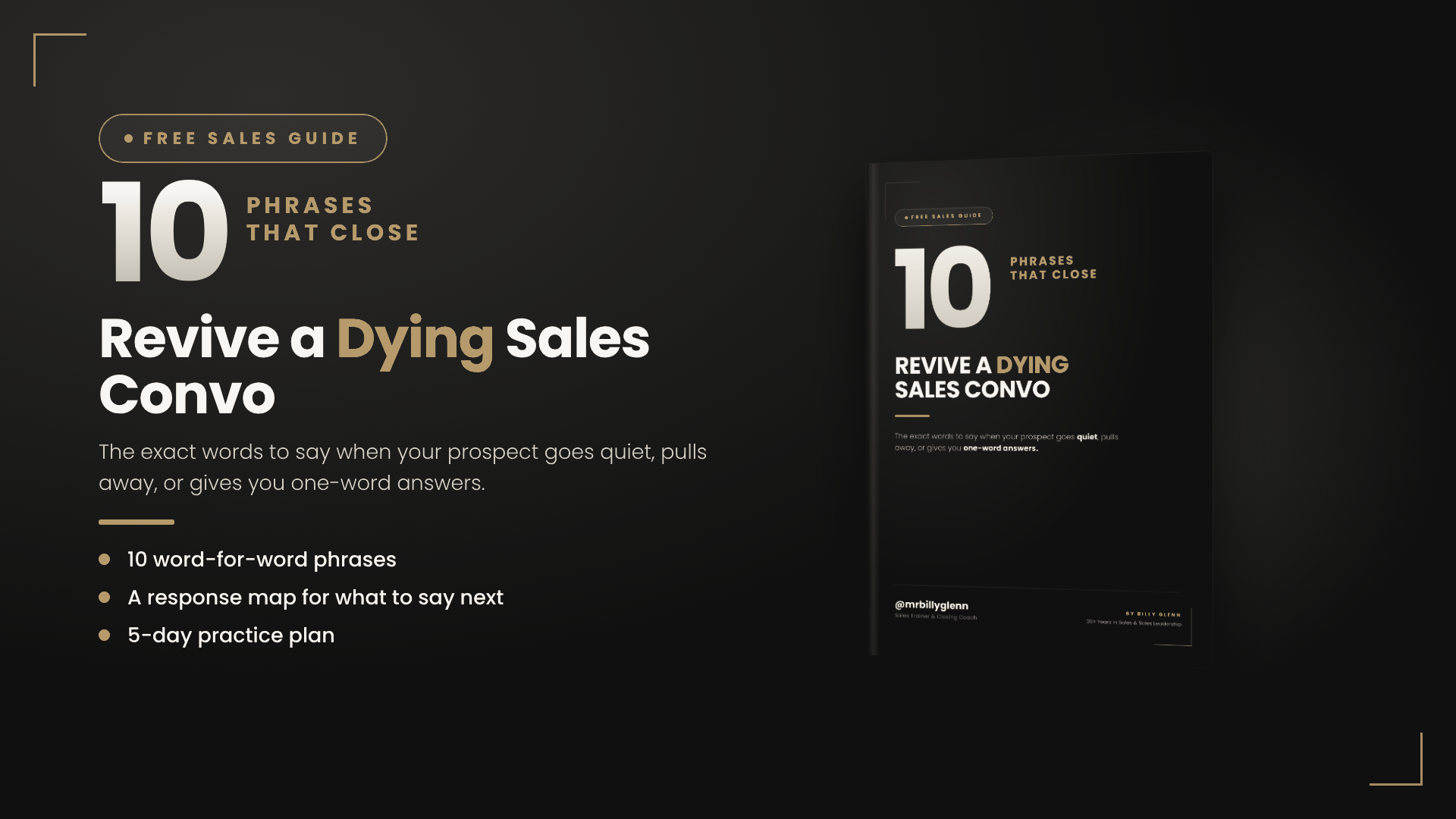
Want a head start? Grab my free guide, 10 Phrases That Revive a Dying Sales Conversation, and use them on your very next call.
About Billy Glenn
Billy has spent more than 20 years in sales and sales leadership. He teaches the words, frameworks, and habits that turn conversations into closed deals. More about Billy